Hi everyone. My name is Dr. Michael Evans and I am replying at the request of aussiponics to answer some of your questions about the organic silver perch diet I am developing. First a little background. I am an animal and aquaculture nutritionist and have during my career developed feeds for a range of aquaculture species including silver perch, barramundi, salmon, trout, aquarium fish, prawns, freshwater and marine crayfish. I also have a keen interest in organic livestock production. To this end I am trying to combine both my interests to produce a range of economic organic aquaculture feeds mainly for small holders. Aussiponics drew my attention to aquaponics early last year and I have purchased information from Joel Malcolm to find out more information about Aquaponics, and have been working on developing appropriate aquaculture diets.
I will try to address some of the queries raised in the forum.
1. Organic production is more than what you include or exclude from diets. Organics is a wholeistic approach to food production and about recycling nutrients and efficient use of resources (this is what aquaponics is about) and also about sourcing appropriate ingredients which have been grown inaccordance with sound agricultural practices designed to preserve and protect the soil and the environment. It is true organics do not allow the use of antibiotic and medicines in feeds, but organics is more than what we include or don't include in feed. We do however include a range of approved feed additives in feeds, such as natural organic herbs, which help to build immunity and help fight disease.
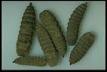
2. The feeds we develop are based around the nutrient requirements of the specific species determined by research. For example, Dr Stuart Roland and Dr Geoff Allan from the NSW DPI Aquaculture centres have conducted research into the nutrient requirements of silver perch and also into feeding rates and frequencies. I have used their information generated from this research, as well as other studies in the scientific literature to develop the feeds . The diets have been designed based on the latest research to ensure efficent use of the ingredients and promote growth to market size in the shortest possible time at minimum cost. The diets also contain a range of key added vitamins (such as vitamin C) and trace minerals, including organic selenium. All these are designed to promote good health and reduce mortality. They also impart some of these nutrients to the flesh which are good for us when we eat it, such a w3 fatty acids, vitamins. The feeds are made from high quality organic feed ingredients , fish meal, organic soybean meal, wheat by-products, organic copra meal, organic legumes, organic herbs, vitamin and minerals.
The current diet specification is 35% protein, 14 MJ/kg.
3. Fish meal is an ideal protein source for aquaculture species as it has a good amino acid profile, high in fish oil and w3 fatty acids. It is easily digested by most aquaculture species. The fish meal we use is the by-product of tuna canning operations in the South Pacific and is from wild caught tuna fisheries (this material would be wasted if it wasn't rendered into fish meal). I do not use fish meal from fishing operations that catch fish solely for fish meal production as this is unsustainable for the fishery and against organic princples. Tuna Fish meal is considered to be organic because it is natural from the sea and it is a by-product. There is no limit on its use in aquaculture organic diets. Under international law fish meal is classified as a hazardous raw material because it is prone to spontaneous combustion and therefore must be stabilised with an approved antioxidant to avoid it bursting into flames in cargo holds of ships and storage warehouses. Antioxidants are safe if used properly and pose no threat to human health when fish meal is fed to aquaculture species. It also helps to reduce rancidity of the feed which destroys important vitamins and can impart offensive odours to the flesh of the fish.
High oil (expeller) vegetable protein meals sometimes need an antioxidant for a similar reason. Expeller vegetable protein meals are used in organic feed since solvent extracted meals are not allowed.
4. Whilst in principle I do not object to the use of meat meal in diets for aquaculture species, under the organic principles organic meat meal must be derived from cattle and sheep grown under organic principles. Unfortunately, for economic reasons, non of the abattoirs are willing to separate organic cattle and sheep from non-organic so therefore no organic meat meal is produced currently in Australia. Under the 5% rule in organics some non-organic meal is permitted in organic diets but I choose not to include non-organic meat meal in diets because I am not sure of the background of the cattle. Some cattle have been fed on medicines (ionophores) and have had hormone implants and I do not want to risk any possible contamination. In practice however, the level included in organic diets is only about 3% so it is not worth it when I can use fish meal or organic soybean meal. The cost advantage of using meat meal is minimal.
5. The organic silver perch diet we will be producing, is a sinking short cut 4 mm water stabilised pellet and will be made in my factory and a dedicated organic feed mill. We can only produce floating pellets on an extruder. Unfortunately, we do not have crumbler equipment or sieving equipment so in the short term we cannot make a range of crumble or pellet sizes which we would like to do, only the 4 mm pellet. If there is enough interest shown then it is logical we will progress to this further to produce various sizes. The sinking pellet is not a problem for silver perch as they feed equally as well on the bottom as on the top.
6. The feed is packed in 25 kg poly bags.
7. Organic feeds are usually more expensive than convential feeds because the feed ingredients are more expensive. An estimate of price (ex Store Capalaba, Qld, excluding GST) is as follows:
1 to 9 bags A$2.50 per kg (A$62.50 per bag)
10-39 bags A$2.37 per kg (A59.25 per bag)
40 bags plus (1 tonne pallet lots) A$2.25 per kg (A$56.25 per bag).
For the person in Townsville who was asking about price we should be able to meet your $3.00 per kg limit after adding freight and GST.
We are happy to dispatch it for you, but freight is at your cost. Freight is a big issue and expensive in this country so cooperation between people and working together could help to reduce the cost by buying in quantity and shering freight costs. If you want to pick up product from me direct that is ok as well.
If a number people want to combine their orders together to take advantage of pallet lots and save on freight that is OK. if someone wants to act as the central point that would be good.
Payment is cash or by direct payment to our bank account. We do not have a credit card facility as it adds to the cost.
8. If you are interested in organic silver perch feed then people can contact me on my email at
michael@appliednutrition.com.au and I will send you a product information sheet. I am also interested in developing organic feeds for other species so if there is anyone who has an interest in other aquaculture species let me know.
9. Product should be available in about 3 to 4 weeks.
I hope I haven't bored you all and I look forward to any feedback or questions you may have.
kind regards
Michael
 Backyard Aquaponics