I began my systems in May 2012 and went through the usual growing pains. I found this website extremely helpful during the process of getting my systems started. I am indebted to many posters here that provided advice from their postings. I also PM'd a member here who was very gracious in dispensing additional advice especially in regards to specific questions regarding pumps, fittings and automatic bell siphons. Frankly, I've found that after a website's forums have been up and running for a number of years that there is already a wealth of information available to the beginner through the search function and I haven't needed to post much as a result. I do have some questions I will be posing in another thread and I am also posting my systems in case anyone can learn from how I went about it.
In the summer of 2011, I received a 550 gallon/2000 liter HDPE cylindrical brine tank that a friend had used to grow a tropical tree in his greenhouse, and that he longer needed. I stumbled upon this website and decided that I would like to turn the brine tank into a fish tank. I also felt after reading here about the various systems that a CHIFT-PIST system would work out the best given the space constraints that I was working with.
Instead of diving right into such a large system, I decided to first start with a much smaller one and then scale up if I felt that I could make a go of it. I decided on the CHIFT-PIST system. For the fish tank, I used a 55 gallon/208 litre barrel. For the grow bed, I used a 23 gallon/87 liter concrete mixing tray. For the sump tank, I used a 100 gallon/378 liter Rubbermaid stock tank that I already had. I realize that the grow bed is tiny and well under the 2 to 1 volume ratio of grow bed to fish tank that is recommended, but this was to be a test system only and I was looking for the least expensive way to set it up. The concrete mixing tray I used for the grow bed was available at the local hardware store and fit the bill quite well. For grow bed media, I used pea gravel also available at the hardware store.
Pictured below is the system when I first set it up but without the grow media inside it: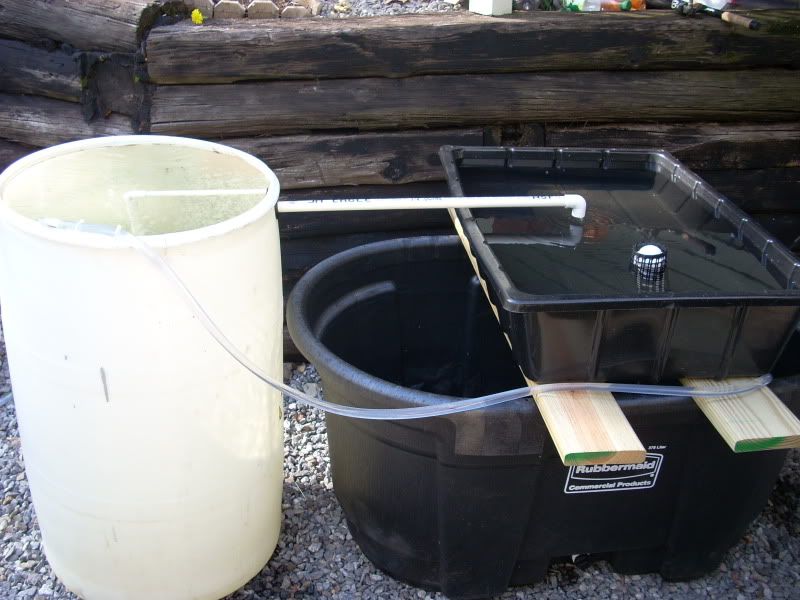 The next picture shows the system from above filled with gravel. The system uses a small submersible fountain pump and an automatic bell siphon to make this a CHIFT-PIST Flood and Drain system:
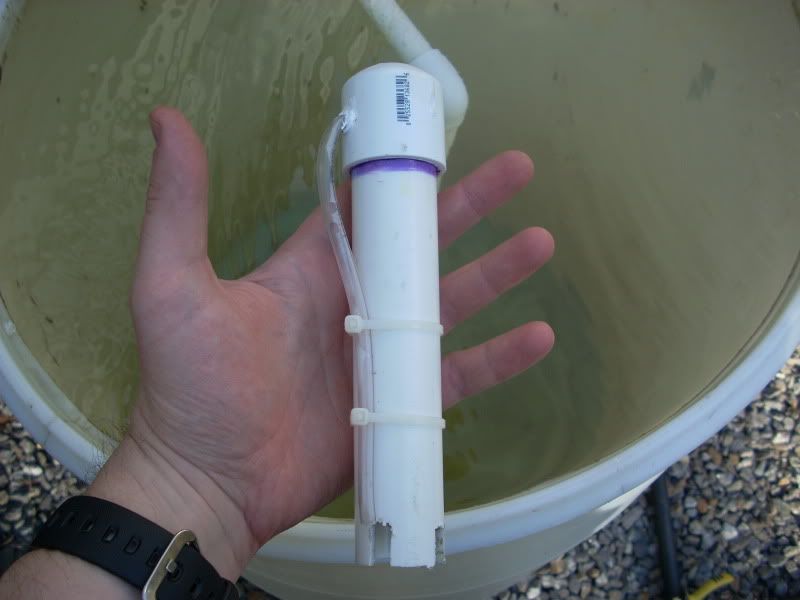
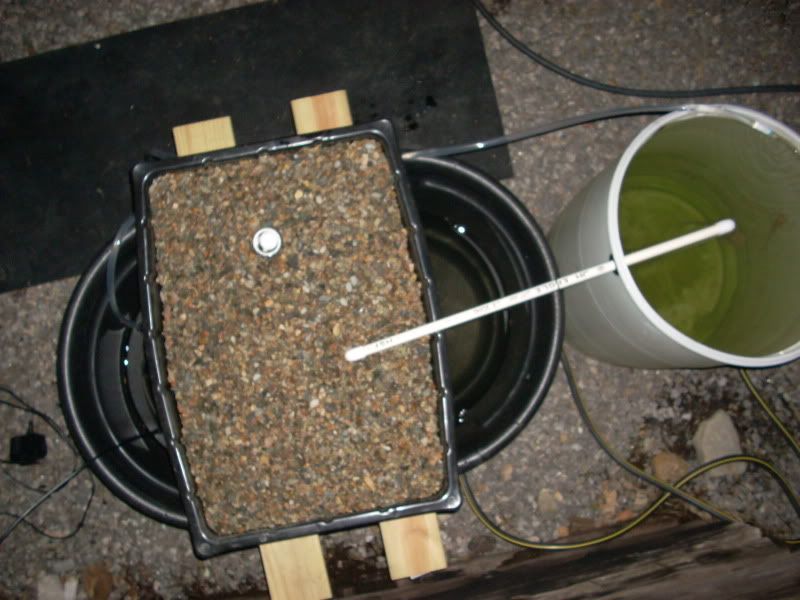 Automatic Bell Siphon:
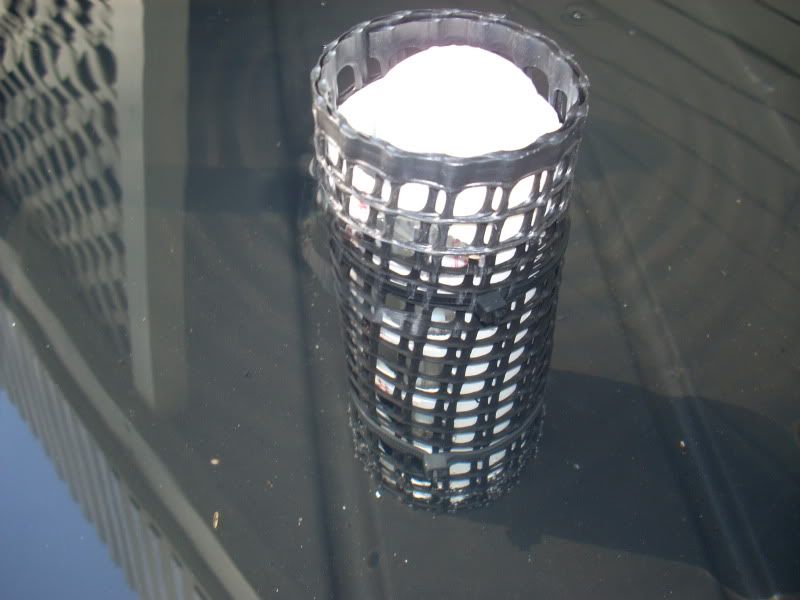
 Gravel guard installed:
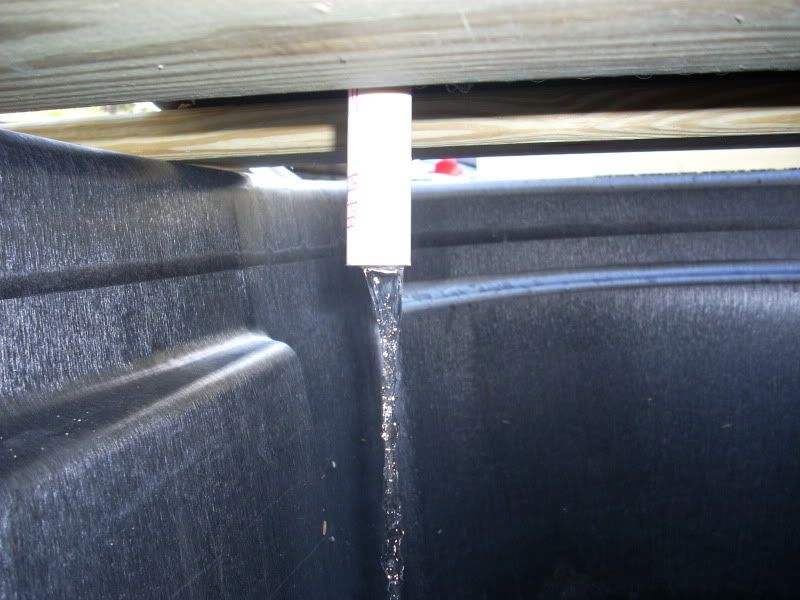
 Bottom of Automatic Bell Siphon draining:
 Sump tank: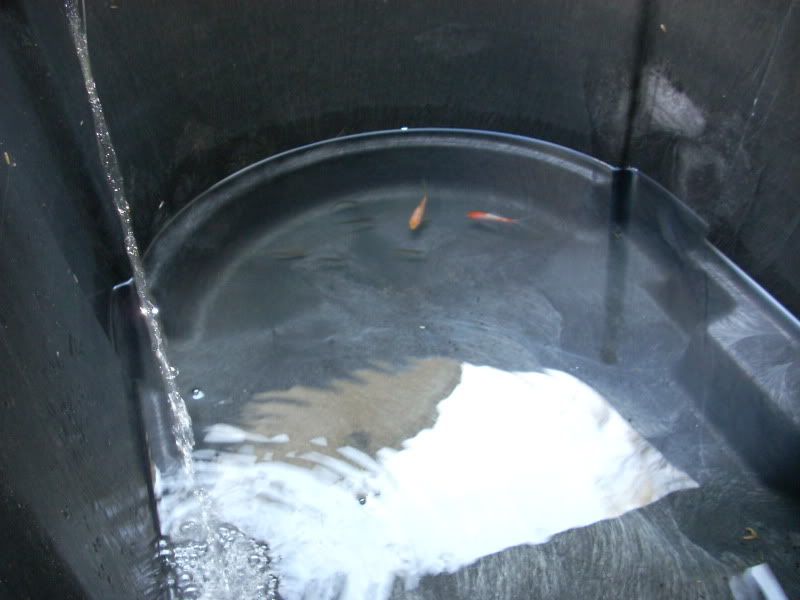
Brown Bullhead Catfish in the fish tank: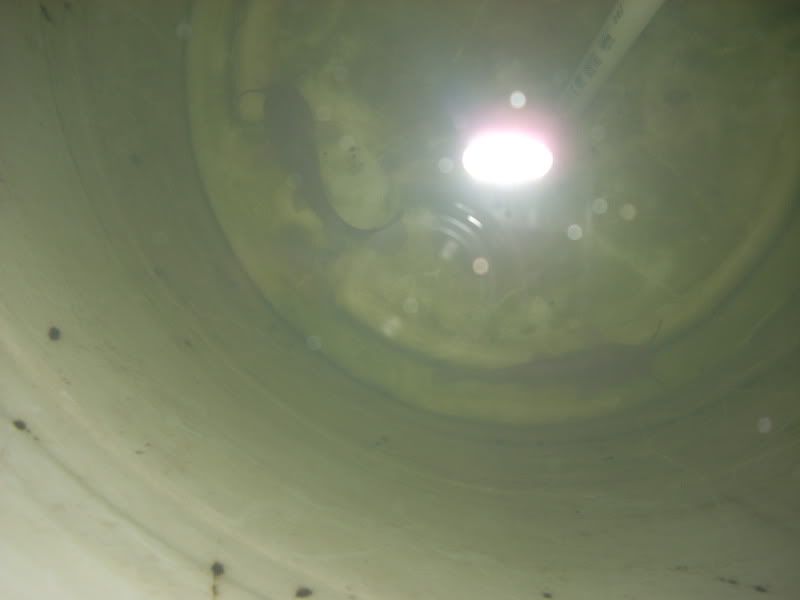
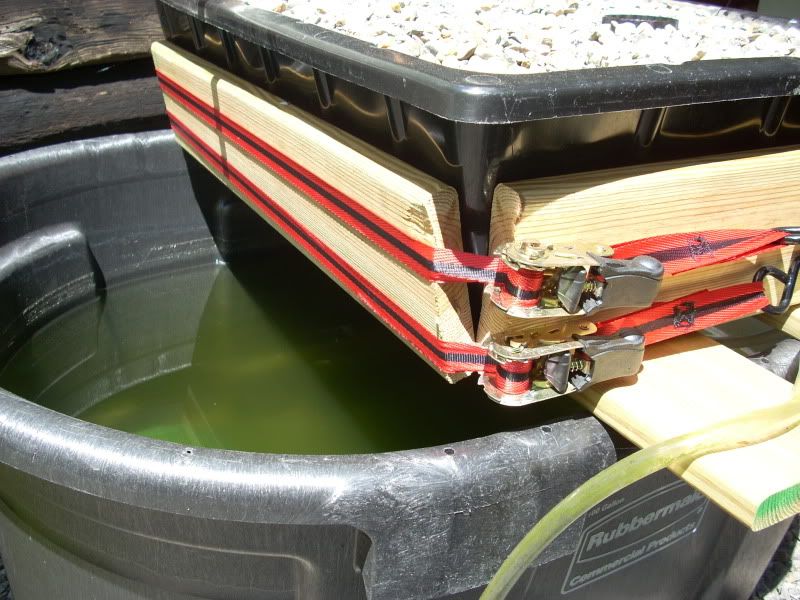
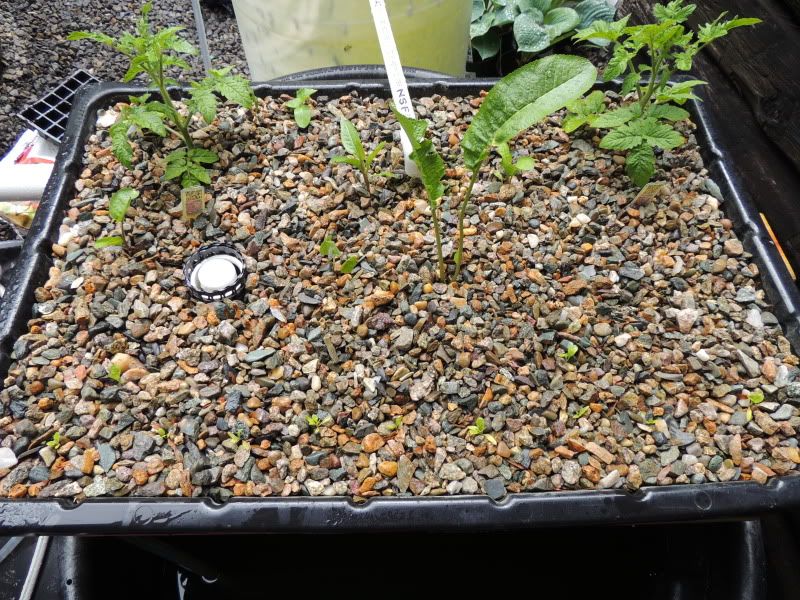
The sides of the grow bed bulged when it was filled with gravel so I improvised a wood/strap system to support it. It has worked out very well and has held up from early May until now (end of September):
 I started the system with cherry tomatoes, horseradish and Swiss Chard:
  I developed a terrible algae problem at one point and cleaned out the fish tank. This is a better view of the three Brown Bullhead Catfish. I learned from reading here how well blocking any bit of light in the system is effective at killing off algae: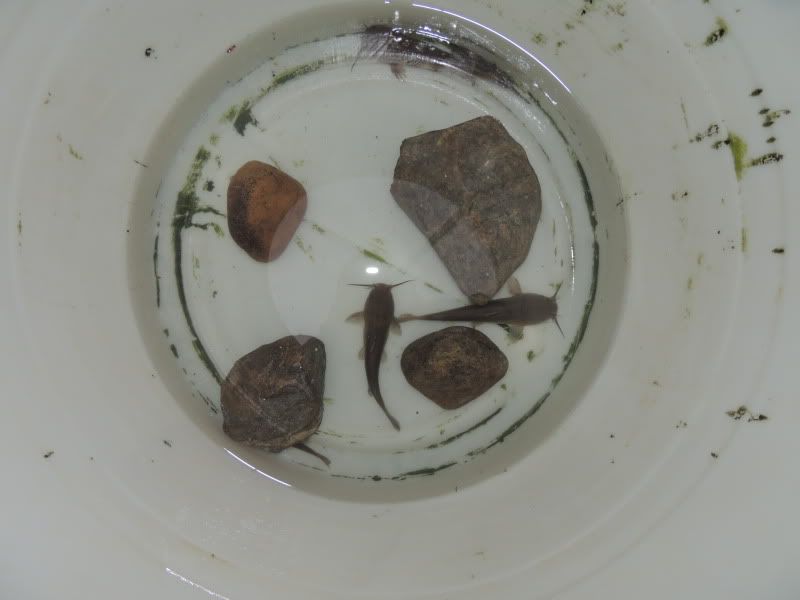
At about this point, I saw that the small system, while in its infancy, was functioning as expected in terms of the pump, plumbing, automatic bell siphon, etc. and I went ahead and started putting the large system together. I did not want to start the bigger project without having a good understanding of how things worked. It also gave me an opportunity to work out most of the bugs and do more reading here.
The following picture has the smaller system on the right (there are some goldfish in addition to Brown Bullhead Catfish) and the larger system on the left. The larger system is composed of a 550 gallon/2000 liter fish tank, 300 gallon/1135 liter grow bed filled with 200 gallons/757 liter grow bed media (this of course was the volume of grow bed media used for calculations of fish stocking), and a ? 500 gallon sump tank made from an oil containment HDPE container that had a hole drained in its side allowing for 275 gallon/1040 liters. The latter sump tank container had been previously used for an aeroponics set-up and never had any oil in it. I purchased the 300 gallon/1135 liter grow bed. It sits on a wood frame keeping it 17 inches/43cm off the ground so the grow bed can drain into the sump tank:
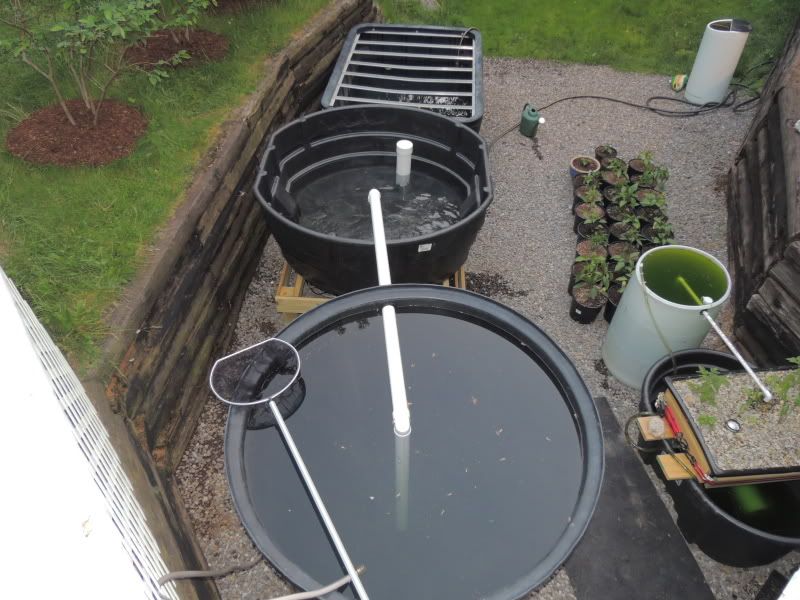
The large fish tank went through a fish type change about halfway through the summer. I tried Rainbow Trout first. I had many problems arise over time including an early complete fish kill of the first batch due to nitrite poisoning, but the main problem I think boiled down to temperature. They simply needed a lower temperature than I could provide.
I settled on Brown Bullhead Catfish because they are plentiful in the local ponds and can manage condition extremes that would kill just about any other fish out there. I have to admit that I was also impressed by the lowly goldfish's ability to weather all kinds of adversities.
The fish tank has a 2" ID PVC pipe that starts maybe 3"/7cm from the bottom of the tank. There is a 1/2"/1cm plastic mesh that prevents fish larger than that from entering the pipe. The outflow is near the top of the fish tank. The T-junction PVC connector is open at the top to allow for overflow into the pipe at the top should the mesh-covered entrance of the tubing at the bottom of the tank become completely obstructed. Here is a picture from the top. Some Brown Bullhead Catfish can be seen in the photo: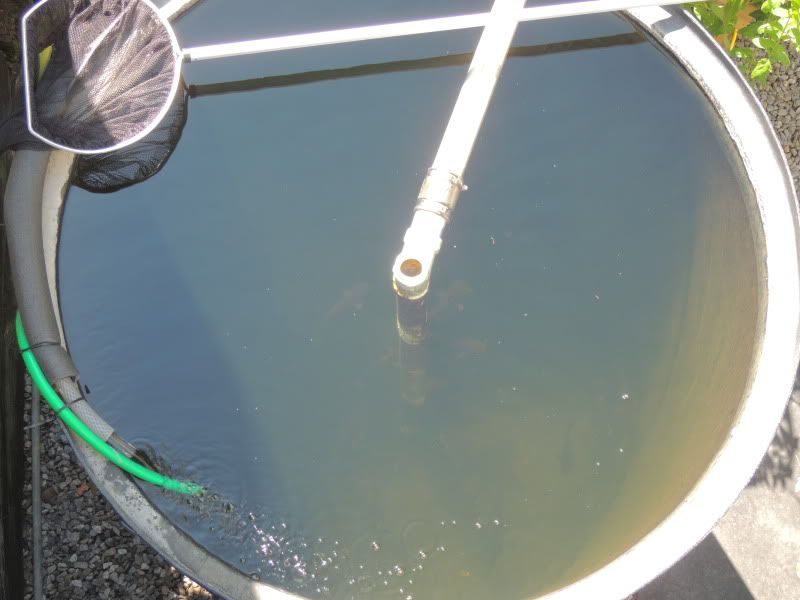
The grow bed media is gravel that I had delivered in bulk locally. It's a very inexpensive but very heavy. I would love to have Hydroton but that's prohibitively expensive because it would have to be shipped here. For plants I have corn, tomatoes, a few horseradish plants and one cucumber plant.
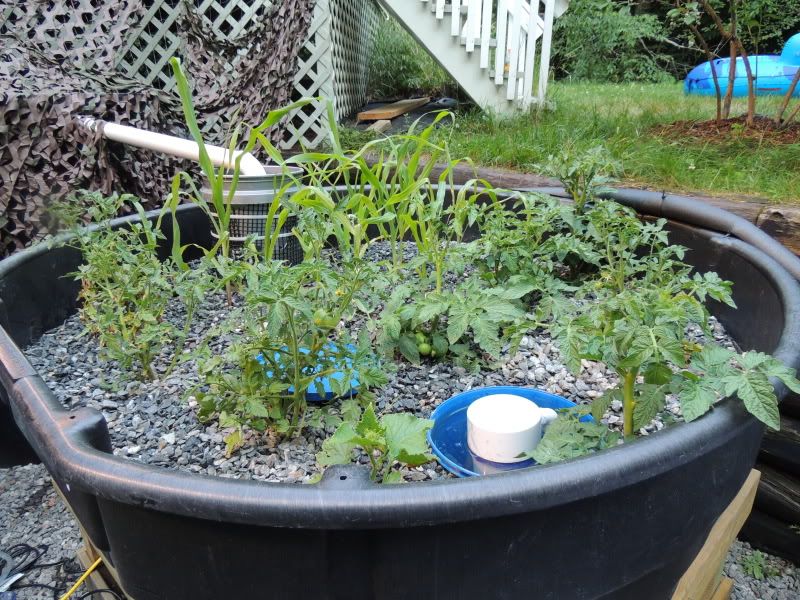
The sump tank is a sump tank. Nothing complicated about it. I couldn't find a short enough container that could contain enough volume to use so I drilled a hole through the side and put the PVC pipe through the hole.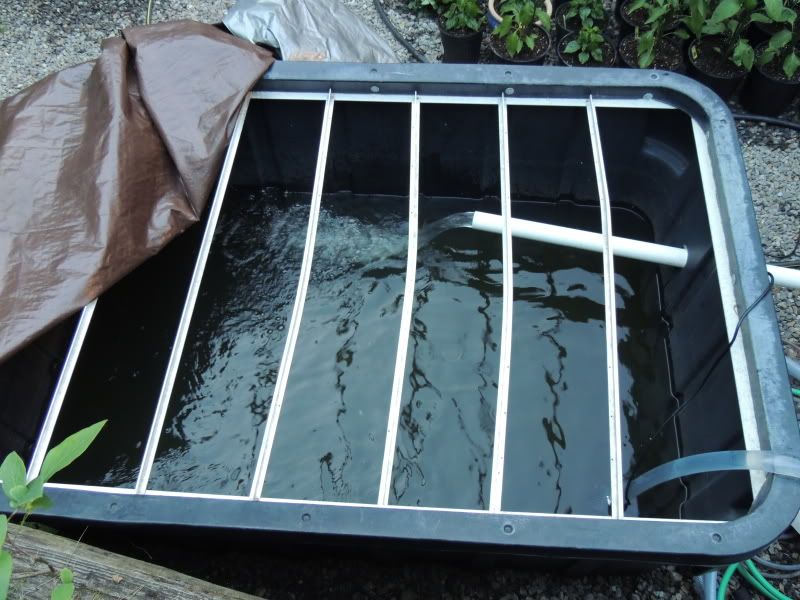
This is a view of the outlet of the bell siphon and into the sump tank: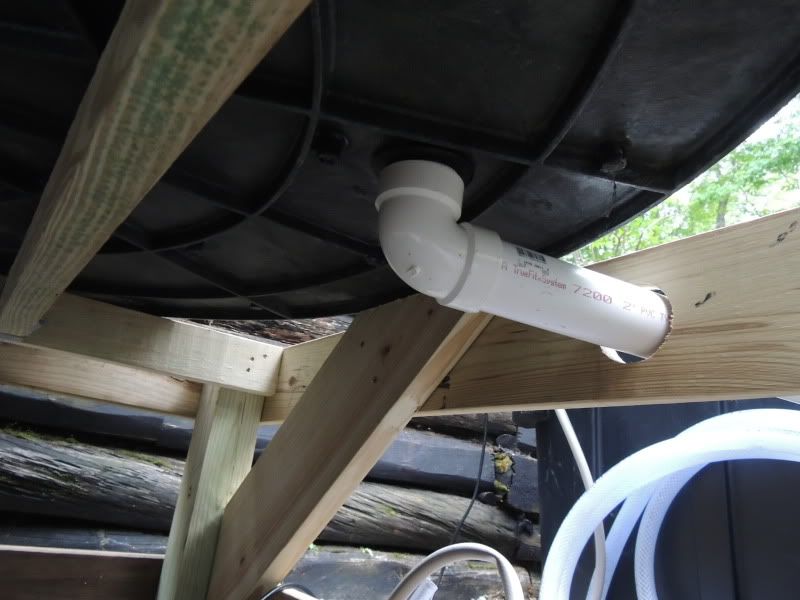
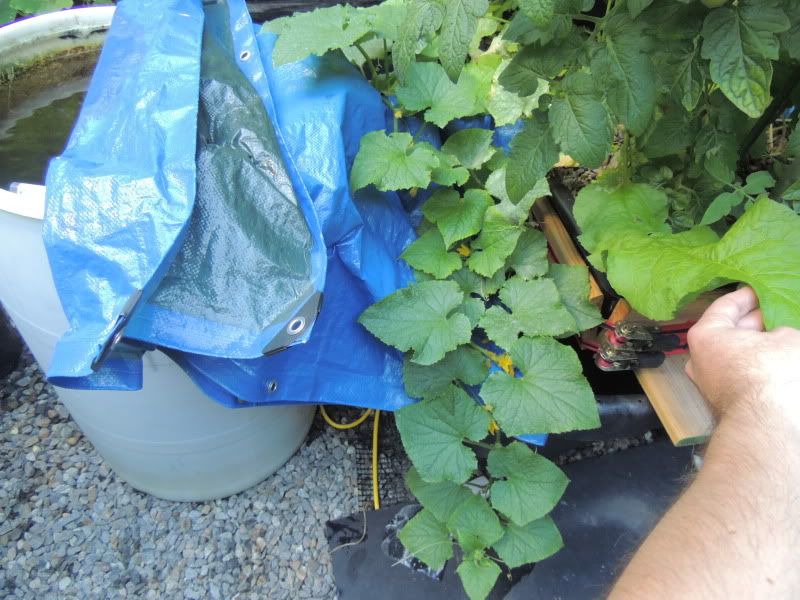
This is a picture of the grow bed and sump tank (covered by silver-colored tarp). The small system on the right has a blue tarp over the fish tank. The large system produced and is still producing tomatoes. The Red Indian corn is stunted but there actually are some husks. The cucumber plant produced two nice cucumbers 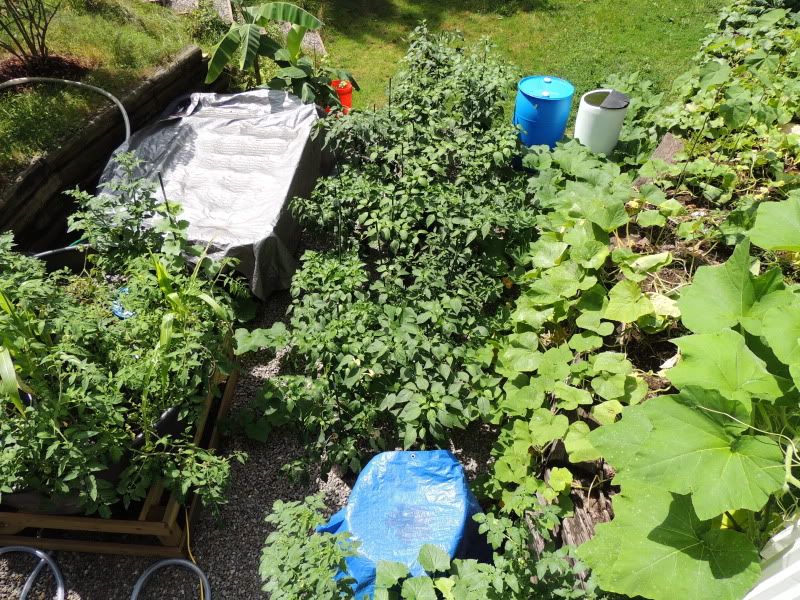
[IMG]http://i76.photobucket.com/albums/j33/C-4C/DSCN0767.jpg{/IMG]
The small system produced a lot of tomatoes as well as cucumbers, and the horseradish looks good too. The first picture is a view from above: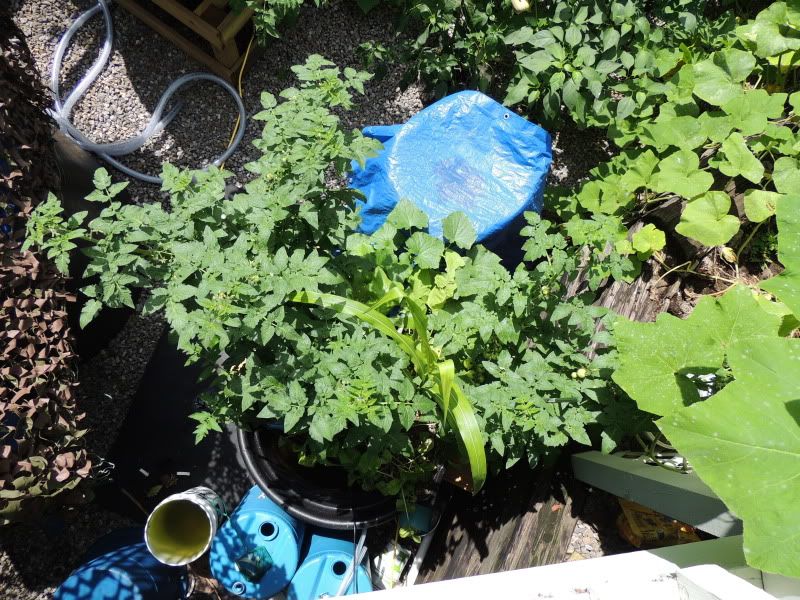
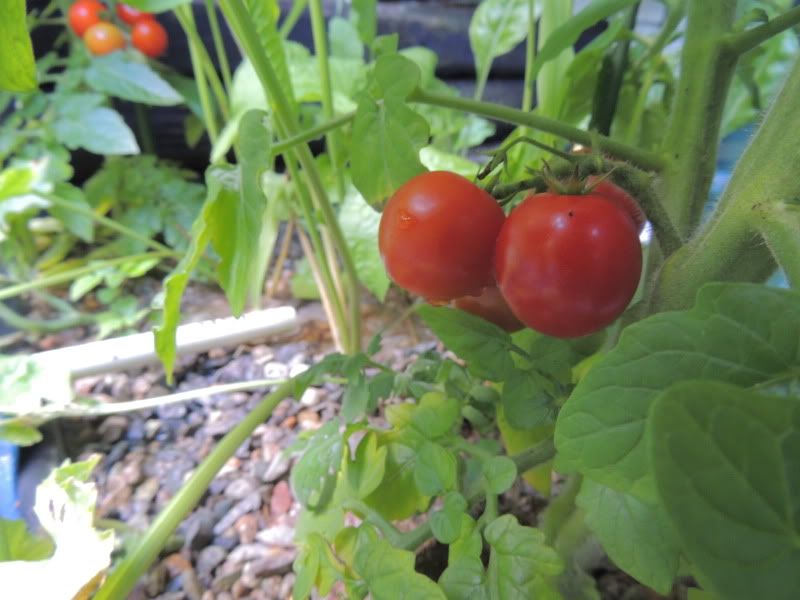
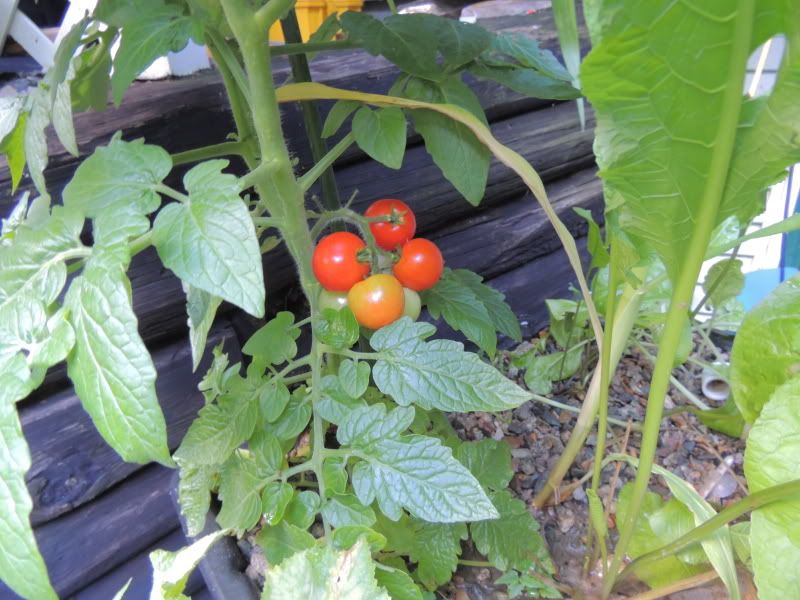
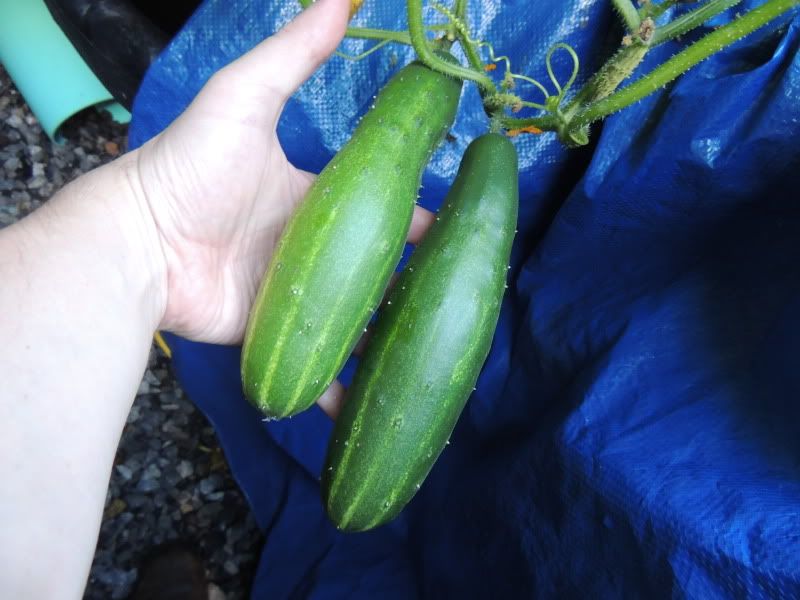
The small system also has one Habanero Pepper plant: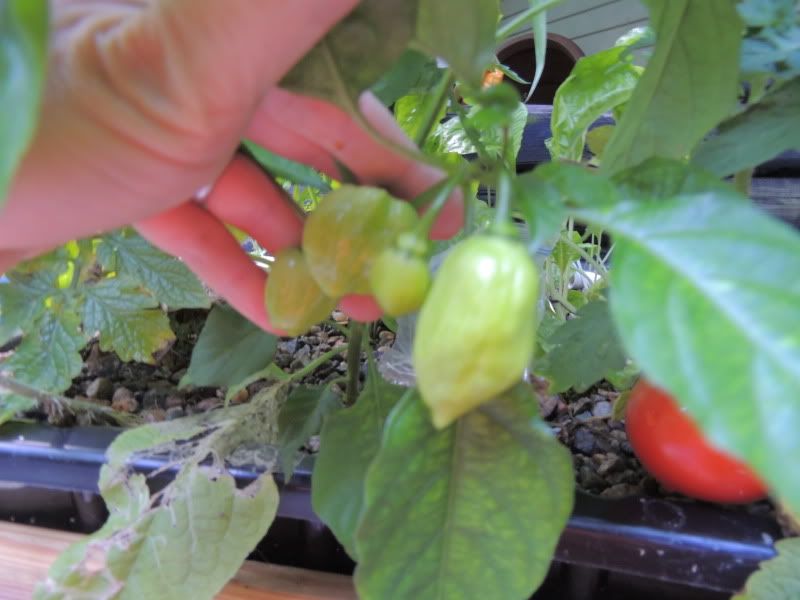
That's it for now. I currently have 25 Brown Bullhead Catfish in the large system and some goldfish and golden shiners in the small system. My plan is to use the 100 gallon/378 liter sump tank from the small system and have the catfish hibernate in my garage over the winter. I will use an agitator of some sort as well as a small aerator to keep the water from freezing. That will be the subject of another thread. NB: Since I'm using wild-caught fish in a home aquaponics system, I do have a non-commercial aquaculture license from the state of NH ($20 a year).
 Backyard Aquaponics