⚠️ This forum has been restored as a read-only archive so the knowledge shared by the community over many years remains available. New registrations and posting are disabled.

All times are UTC + 8 hours


Post new topic Reply to topic  [ 56 posts ]  Go to page 1, 2, 3, 4  Next
Author Message
PostPosted: Jun 19th, '08, 12:05 
Valued Contributor
Valued Contributor
User avatar

Joined: Sep 7th, '07, 11:23
Posts: 88
Location: Margaret River
Gender: Male
Are you human?: Sometimes.
Location: Margaret River.
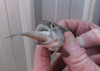
I am finding dead Rainbow Trout in my 6,000 litre tank. On inspection they have gone blind with a white eye and have opaque white jelly blobs on their bodies. Some have also ulcerated or torn skin.
The Trout are about 6" long.

My water temperature is 13°C and I have a good German aeration system running.
I have a 200 litre bio filter and numerous floating plants within the pond tank.
Nitrate level is reading Zero.
Ph is about 7.4 or more.
The tank is under a 90% shade cloth.
There is no algea in the water.
I have half drained the tank recently because the level rose rapidly with the heavy rains in Margaret River.

The Trout were eating vigerously untill I introduced a larger size pellet. I have reintroduced 3mm pellets from Stirling Bulk and the fish are eating better but not as vigerously as before the original change of pellets. The larger pellets came from Tasmania as did the original 3mm size.

At this stage I have added salt to the tank to see if any change occurs.

Is there any one who has experienced the same or similar and had a positive outcome?


Top
 Profile  
Reply with quote  
    Advertisement
 
PostPosted: Jun 19th, '08, 15:09 
Almost divorced
Almost divorced
User avatar

Joined: Aug 4th, '06, 21:07
Posts: 1007
Location: Perth
Gender: Male
hey trev,

too many variables but sounds like it may be fungal related.

what are your ammonia and DO levels like?

i'd say either the change in feed has increased your ammonia, lowered your DO level or perhaps both.

if ammonia is good i would consider either cutting feed or increasing aeration.

the salt treatment was the right thing to do but you still need to address the cause of the problem.


Top
 Profile  
Reply with quote  
PostPosted: Jun 19th, '08, 15:16 
Was the different feed old... bag unbroken?


Top
  
Reply with quote  
PostPosted: Jun 19th, '08, 15:28 
Site Admin
Site Admin
User avatar

Joined: Mar 22nd, '06, 00:28
Posts: 12757
Location: Melbourne, Victoria
Gender: Male
Are you human?: YES- kinda
Location: Melb Vic OZ
may be Saprolegnia (do a forum search)

sharp downward temperature spike probably the cause. sounds like they may be too far gone, but 10+ppt salt may help the ones that are not.

trout man may be able to confirm

http://en.wikipedia.org/wiki/Saprolegnia

http://www.google.com.au/imgres?imgurl= ... image&cd=1


Top
 Profile  
Reply with quote  
PostPosted: Jun 19th, '08, 21:07 
Almost divorced
Almost divorced
User avatar

Joined: Oct 11th, '06, 07:39
Posts: 1162
Location: Bunbury, Western Australia
Gender: Male
Location: Bunbury, Western Australia
Im leaning towards Yersinia ruckeri on this one mainly due to the fact that its affecting the eyes as well as the body. This bacterial disease is widespread in the environment and is spread by amphibians.
Have you seen any frogs in your tank at all???
Like most disease, outbreaks usually occur when the fish are stressed so I imagine there may be a water quality issue here also. I find it hard to believe that with 150 trout in your tank for 5 weeks all your Ammonia readings are still 0. I know you have zeolite in your Bio-Filter so perhaps this is possible.


Top
 Profile  
Reply with quote  
PostPosted: Jun 19th, '08, 21:25 
Seriously, this cant be healthy.
User avatar

Joined: Oct 11th, '07, 19:43
Posts: 6687
Gender: Male
Are you human?: Not at 3 am :(
Location: Kalgoorlie
I had this when my small system had a period of bad water qualty, a 100% water change and 5 ppt salt removed it. The water change was done by overflowing the tank with a constant small trickle of water for 24 hours. The grass is nice and green :)

Gooby eyes and white spot things.

Only 1 death out of the 12 in the system, but the death was 1.5 weeks after the water change.


Top
 Profile  
Reply with quote  
PostPosted: Jun 19th, '08, 22:28 
Site Admin
Site Admin
User avatar

Joined: Mar 22nd, '06, 00:28
Posts: 12757
Location: Melbourne, Victoria
Gender: Male
Are you human?: YES- kinda
Location: Melb Vic OZ
thanx troutman, i know you are in the know, i only suggested sap as i know the trout are susceptible.

does the yersinia grow as quick? i remember that i could check mine in the morning and then after work it seems to have double the coverage over the fish :(

are many of the fungus' treatable with 10+ppt salt troutman?


Top
 Profile  
Reply with quote  
PostPosted: Jun 19th, '08, 22:35 
Think most fungal problems will respond to salting Steve....

Problem is if the fungal problem is a secondary infection to something bacterial... or a secondary bacterial infection takes hold due to the weakened state of the fish because of the initial cause that lead to the fungus.... might be too late...

Don't think most bacterial infections respond that well to salting do they troutman? ...


Top
  
Reply with quote  
PostPosted: Jun 20th, '08, 10:10 
Valued Contributor
Valued Contributor
User avatar

Joined: Sep 7th, '07, 11:23
Posts: 88
Location: Margaret River
Gender: Male
Are you human?: Sometimes.
Location: Margaret River.
Hey,
I can't believe the amount of support in such a short time.

Nitrate levels are still zero.

I have dropped a bucket of salt into the tank. I figured (this is always a worry), any way that as the Donnelly River has good size Trout in it and one can taste the salt in it, that I would be safe to throw in some salt.
At this stage I can't taste the salt so I presume the level is lower than that which presides in the Donnelly River and therefore should be safe.

I need some way to measure the salt ppm?

This morning a look at the pool which I salted the previous night shows no increase in the death rate which at this stage is about 2 to 3 per day.

It has been suggested that I may have fed the fish 5mm pellets too young in their lives and they have choked. I hope this is the case and that the blindness and jelly blobs and lesions are a secondary result. If that is the case then I have a chance as I am now feeding 3mm pellets. Incidentally, the pellets have been and are all fresh from a reliable source.

I once saw a fellow at Baldivis with blue water which his wife said he was using to eleminate some infection. I don't know what that was?

I also need a little guidance on what I might not be doing when trying to upload a macro picture of the fish to the site?
I wonder if there is a size limit on the image?

Yes, amphibians reside here, but there do not appear to be any in the tank, though I did find one in the bio filter a couple of weeks ago.

Might a UV filter assist?


Top
 Profile  
Reply with quote  
PostPosted: Jun 20th, '08, 10:21 
Bordering on Legend
Bordering on Legend
User avatar

Joined: Sep 27th, '07, 10:42
Posts: 360
Location: Canberra, ACT
Gender: Male
Are you human?: Yes
Location: Canberra, ACT
Yersinia, hmmm, where have I heard that before... ah yes, Yersinia Pestis... check it out. Hehehehe


Top
 Profile  
Reply with quote  
PostPosted: Jun 20th, '08, 11:03 
Valued Contributor
Valued Contributor
User avatar

Joined: Sep 7th, '07, 11:23
Posts: 88
Location: Margaret River
Gender: Male
Are you human?: Sometimes.
Location: Margaret River.
Enteric redmouth disease (Yersinia ruckeri)
Yersinia ruckeri, can affect salmonids and other fish in freshwater and seawater. It is most prominent in the farming of rainbow trout in freshwater but charr is also fairly sensitive to this disease. In some countries it is a common pathogen in the farming of salmonids and it has been detected in 20 wild species of fish both in freshwater and seawater.

Symptoms:
Are similar to symptoms of other Gram negative infections. The disease gets its name from a bleeding of mouth and mandibles, which is however not always the case. The disease can develop fast or slowly. The quick cases (acute phase) are indicated by high mortality rate without apparent external symptoms. This is more common in freshwater rearing of salmon fry, but is also known in smolts. The slow or gradual form of this disease is more common, with considerable or moderate mortality rate for a few weeks, when losses abate. The death rate is usually highest in connection with stress such as transport or when infected fry are put into saline water. Individual fish may show a kind of sleepiness, disturbance of balance, breathing difficulties and colour changes. Also pop eyes, edema of belly and bleeding of gills, skin and fins. Internal changes are similar to those described for other Gram negative bacteria.

On a close perusal the above disease doesn't seem to match the symptoms effecting my trout.


Top
 Profile  
Reply with quote  
PostPosted: Jun 20th, '08, 12:30 
Almost divorced
Almost divorced
User avatar

Joined: Jan 1st, '08, 15:35
Posts: 1054
Location: Perth
Gender: Male
Are you human?: Nope - Nexus 6
Location: variable
the blue water might be Methylene blue ? I used it to trea some goldfish years ago

youre TASTING your water for salt levels ?? AFTER your fish died of a mystery disease ?!!?


Top
 Profile  
Reply with quote  
PostPosted: Jun 20th, '08, 14:14 
Trevour wrote:
I need some way to measure the salt ppm?


Trev..... generally we treat at 3ppt..... that's equivalent to 3g/ltr... so a 1000ltrs would require 3Kg....

You've got 6000ltrs.... so that's 18KG to treat to 3ppt..... but I think it was mentioned at least 6ppt - 10ppt....

6ppt would be 36Kg...... don't worry about the trout... they'll tolerate salinity to 15ppt without a problem.

Troutman should be able to confirm this..... but trout have a "salt" water stage of life... and seawater is around 26ppt.....


Top
  
Reply with quote  
PostPosted: Jun 20th, '08, 17:50 
Seriously, this cant be healthy.
User avatar

Joined: Oct 11th, '07, 19:43
Posts: 6687
Gender: Male
Are you human?: Not at 3 am :(
Location: Kalgoorlie
Pictures are to be 250kb max, and 800 x 600 max


Top
 Profile  
Reply with quote  
PostPosted: Jun 20th, '08, 20:56 
Bordering on Legend
Bordering on Legend
User avatar

Joined: Sep 27th, '07, 10:42
Posts: 360
Location: Canberra, ACT
Gender: Male
Are you human?: Yes
Location: Canberra, ACT
At least it's not this one...

Yersinia pestis (Pasteurella pestis) is a Gram-negative rod-shaped bacterium belonging to the family Enterobacteriaceae. It is a facultative anaerobe that can infect humans and other animals.
Human Y. pestis infection takes three main forms: pneumonic, septicemic, and the famous bubonic plagues.[1] All three forms have been responsible for high mortality rates in epidemics throughout human history, including the Black Death (a bubonic plague) that accounted for the death of approximately one-third of the European population in 1347 to 1353.
Recently Y. pestis has gained attention as a possible biological warfare agent and the CDC has classified it as category A pathogen requiring preparation for a possible terrorist attack.
:lol: :lol: :lol:


Top
 Profile  
Reply with quote  
Display posts from previous:  Sort by  
Post new topic Reply to topic  [ 56 posts ]  Go to page 1, 2, 3, 4  Next

All times are UTC + 8 hours


You cannot post new topics in this forum
You cannot reply to topics in this forum
You cannot edit your posts in this forum
You cannot delete your posts in this forum
You cannot post attachments in this forum

Search for:
Jump to:  

Powered by phpBB® Forum Software © phpBB Group
Portal by phpBB3 Portal © phpBB Türkiye
[ Time : 0.046s | 14 Queries | GZIP : Off ]