⚠️ This forum has been restored as a read-only archive so the knowledge shared by the community over many years remains available. New registrations and posting are disabled.

All times are UTC + 8 hours


Post new topic Reply to topic  [ 7 posts ] 
Author Message
 Post subject: one for the petrol heads
PostPosted: May 5th, '08, 22:01 
Site Admin
Site Admin
User avatar

Joined: Mar 22nd, '06, 00:28
Posts: 12757
Location: Melbourne, Victoria
Gender: Male
Are you human?: YES- kinda
Location: Melb Vic OZ
Top Fuel Dragster Stats
*A LESSON IN ACCELERATION*
First, some useful info:

One Top Fuel dragster 500 cubic inch Hemi engine makes more horsepower
than the first 4 rows at the Daytona 500.

Under full throttle, a Top Fuel dragster engine consumes 1½ gallons of
nitro methane per second; a fully loaded 747 consumes jet fuel at the same rate with 25% less energy being produced.

A stock Dodge 426 Hemi V8 engine cannot produce enough power to drive
the dragster's supercharger.

With 3000 CFM of air being rammed in by the supercharger on
overdrive, the fuel mixture is compressed into a near-solid form before ignition.

Cylinders run on the verge of hydraulic lock at full throttle.

At the stoichiometric 1.7:1 air/fuel mixture for nitro methane the
flame front temperature measures 7050 degrees F.
Nitromethane burns yellow. The spectacular white flame seen above
the stacks at night is raw burning hydrogen, dissociated from atmospheric water
vapor by the searing exhaust gases.

Dual magnetos supply 44 amps to each spark plug. This is the output
of an arc welder in each cylinder.

Spark plug electrodes are totally consumed during a pass.

After 1/2way, the engine is dieseling from compression plus the glow of exhaust valves at
1400 degrees F. The engine can only be shut down by cutting the fuel flow.

If spark momentarily fails early in the run, unburned nitro builds
up in the affected cylinders and then explodes with sufficient force to blow cylinder heads off the block in pieces or split the block in half.

In order to exceed 300 mph in 4.5 seconds dragsters must accelerate
at an average of over 4G's. In order to reach 200 mph well before
half-track, the launch acceleration approaches 8G's.

Dragsters reach over 300 miles per hour before you have completed
reading this sentence.

Top Fuel Engines turn approximately 540 revolutions from light to light!
This one confused Stan, but stop & ponder the fact that the engine is only used for apx 4 to 5 seconds.
Including the burnout the engine only survive 900 revolutions under
load.

STEVES EDIT: i had to work this out to believe it!
9500RPM/60= 158 rev per second
158x5= 948 revolutions


The red-line is actually quite high at 9500 rpm.

The Bottom Line; Assuming all the equipment is paid off, the crew
worked for free, and for once NOTHING BLOWS UP, each run costs an estimated $1,000.00 per second. The current Top Fuel dragster elapsed time record is 4.441 seconds for the quarter mile (10/05/03, Tony Schumacher). The top speed record is 333.00 mph (533 km/h) as measured over the last 66' of the run (09/28/03 Doug Kalitta).

Putting all of this into perspective:
You are riding the average $250,000 Honda MotoGP bike. Over a mile up
the road, a Top Fuel dragster is staged and ready to launch down a quarter mile
strip as you pass. You have the advantage of a flying start. You run the
RC211V hard up through the gears and blast across the starting line and past the dragster at an honest 200 mph (293 ft/sec). The 'tree' goes green for both of you at that moment. The dragster launches and starts after you.
You keep your wrist cranked hard, but you hear an incredibly brutal
whine that sears your eardrums and within 3 seconds the dragster catches and passes you
He beats you to the finish line, a quarter mile away from where you just
passed him. Think about it, from a standing start, the dragster had spotted you 200 mph and not only caught, but nearly blasted you off the road when he passed you within a mere 1320 foot long race course.


Top
 Profile  
Reply with quote  
    Advertisement
 
PostPosted: May 6th, '08, 05:31 
Seriously, this cant be healthy.
User avatar

Joined: Aug 24th, '06, 19:46
Posts: 6604
Location: sunbury
Gender: Male
Are you human?: no
Location: sunbury
steve wrote:
Top Fuel Dragster Stats
*A LESSON IN ACCELERATION*
First, some useful info:

One Top Fuel dragster 500 cubic inch Hemi engine makes more horsepower
than the first 4 rows at the Daytona 500.

Under full throttle, a Top Fuel dragster engine consumes 1½ gallons of
nitro methane per second; a fully loaded 747 consumes jet fuel at the same rate with 25% less energy being produced.

A stock Dodge 426 Hemi V8 engine cannot produce enough power to drive
the dragster's supercharger.

With 3000 CFM of air being rammed in by the supercharger on
overdrive, the fuel mixture is compressed into a near-solid form before ignition.

Cylinders run on the verge of hydraulic lock at full throttle.

At the stoichiometric 1.7:1 air/fuel mixture for nitro methane the
flame front temperature measures 7050 degrees F.
Nitromethane burns yellow. The spectacular white flame seen above
the stacks at night is raw burning hydrogen, dissociated from atmospheric water
vapor by the searing exhaust gases.

Dual magnetos supply 44 amps to each spark plug. This is the output
of an arc welder in each cylinder.

Spark plug electrodes are totally consumed during a pass.

After 1/2way, the engine is dieseling from compression plus the glow of exhaust valves at
1400 degrees F. The engine can only be shut down by cutting the fuel flow.

If spark momentarily fails early in the run, unburned nitro builds
up in the affected cylinders and then explodes with sufficient force to blow cylinder heads off the block in pieces or split the block in half.

In order to exceed 300 mph in 4.5 seconds dragsters must accelerate
at an average of over 4G's. In order to reach 200 mph well before
half-track, the launch acceleration approaches 8G's.

Dragsters reach over 300 miles per hour before you have completed
reading this sentence.

Top Fuel Engines turn approximately 540 revolutions from light to light!
This one confused Stan, but stop & ponder the fact that the engine is only used for apx 4 to 5 seconds.
Including the burnout the engine only survive 900 revolutions under
load.

STEVES EDIT: i had to work this out to believe it!
9500RPM/60= 158 rev per second
158x5= 948 revolutions


The red-line is actually quite high at 9500 rpm.

The Bottom Line; Assuming all the equipment is paid off, the crew
worked for free, and for once NOTHING BLOWS UP, each run costs an estimated $1,000.00 per second. The current Top Fuel dragster elapsed time record is 4.441 seconds for the quarter mile (10/05/03, Tony Schumacher). The top speed record is 333.00 mph (533 km/h) as measured over the last 66' of the run (09/28/03 Doug Kalitta).

Putting all of this into perspective:
You are riding the average $250,000 Honda MotoGP bike. Over a mile up
the road, a Top Fuel dragster is staged and ready to launch down a quarter mile
strip as you pass. You have the advantage of a flying start. You run the
RC211V hard up through the gears and blast across the starting line and past the dragster at an honest 200 mph (293 ft/sec). The 'tree' goes green for both of you at that moment. The dragster launches and starts after you.
You keep your wrist cranked hard, but you hear an incredibly brutal
whine that sears your eardrums and within 3 seconds the dragster catches and passes you
He beats you to the finish line, a quarter mile away from where you just
passed him. Think about it, from a standing start, the dragster had spotted you 200 mph and not only caught, but nearly blasted you off the road when he passed you within a mere 1320 foot long race course.

Seems like a waste of money[ unless you use the exhaust gas to heat your ap water] :evil:


Top
 Profile  
Reply with quote  
PostPosted: May 6th, '08, 06:55 
Bordering on Legend
Bordering on Legend
User avatar

Joined: Mar 17th, '06, 11:21
Posts: 259
Location: Fremantle, West Aus
Gender: Male
While not a huge fan of drag racing, I went one night a few years back. They had only one top fueler race. After much noise and fire breathing, when the lights went green one of the cars screamed down the track to do a quarter in just under 5s, which was amazing to watch. The other one exploded on the line when it went to take off. The head blow off the motor, went about 30m in the air and landed a couple of meters away from the smouldering wreck. I am sure that one car was finished the race before the other's top half of the engine hit the ground.


Top
 Profile  
Reply with quote  
PostPosted: May 6th, '08, 08:13 
Bordering on Legend
Bordering on Legend
User avatar

Joined: Jan 3rd, '08, 18:45
Posts: 454
Location: San Rafael de Guatuzo
Gender: Male
Are you human?: YES
Location: San Rafael de Guatuso Costa Rica
Once, back in the Jurasic period, I worked in a repair shop that dragged raced, of all things, a VW Bug. :lol: It could be raced twice before you had to rebuild the engine.

There was a racing body - with ads for the shop. Then there was the "sleeper" body. Looked just like a plain ole Bug.

Can you imagine the shock of a vette being destroyed by a Beetle?! :lol: I almost feel guilty just thinking about it... :roll:


Top
 Profile  
Reply with quote  
PostPosted: May 6th, '08, 14:03 
Bordering on Legend
Bordering on Legend
User avatar

Joined: Nov 28th, '07, 11:59
Posts: 252
Location: SUTTON NSW
Gender: Male
Location: Sutton NSW
Steve will appreciate the somewhat greater reliability of an engine that has to run more than a few seconds….
P.S. Current race times are consistently over 500mph.

One Second in the Life of a Racer
by Tom Fey
The Unlimiteds go flashing through the racecourse, engines howling, air shearing, heat waves streaming. Four hundred eighty miles an hour is 8 miles a minute, and the elite racers take about 70 seconds to cover the 9.1 mile Reno course. If you could take a souped P-51 racer flying the circuit at Reno, slow time down, and examine just one second, what would you find?
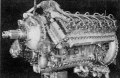
In that one second, the V-12 Rolls-Royce Merlin engine would have gone through 60 revolutions, with each of the 48 valves slamming open and closed 30 times. The twenty four spark plugs have fired 720 times. Each piston has traveled a total of 60 feet in linear distance at an average speed of 41 miles per hour, with the direction of movement reversing 180o after every 6 inches. Three hundred and sixty power pulses have been transmitted to the crankshaft, making 360 sonic booms as the exhaust gas is expelled from the cylinder with a velocity exceeding the speed of sound. The water pump impeller has spun 90 revolutions, sending 4 gallons of coolant surging through the engine and radiators. The oil pumps have forced 47 fluid ounces, roughly one-third gallon, of oil through the engine, oil cooler, and oil tank, scavenging heat and lubricating the flailing machinery. The supercharger rotor has completed 348 revolutions, it's rim spinning at Mach 1, forcing 4.2 pounds or 55 ft3 of ambient air into the combustion chambers under 3 atmospheres of boost pressure. Around 9 fluid ounces of high octane aviation fuel, 7843 BTU's worth of energy, has been injected into the carburetor along with 5.3 fluid ounces of methanol/water anti-detonant injection fluid. Perhaps 1/8 fluid ounce of engine oil has been either combusted or blown overboard via the crankcase breather tube. Over 1.65 million foot pounds of work have been done, the equivalent of lifting a station wagon to the top of the Statue of Liberty.
In that one second, the hard-running Merlin has turned the propeller through 25 complete revolutions, with each of the blade tips having arced through a distance of 884 feet at a rotational velocity of 0.8 Mach. Fifteen fluid ounces of spray bar water has been atomized and spread across the face of the radiator to accelerate the transfer of waste heat from the cooling system to the atmosphere.
In that one second, the aircraft itself has traveled 704 feet, close to 1/8 mile, or roughly 1.5% of a single lap. The pilot's heart has taken 1.5 beats, pumping 5.4 fluid ounces of blood through his body at a peak pressure of 4.7 inches of mercury over ambient pressure. Our pilot happened to inspire during our measured second, inhaling approximately 30 cubic inches (0.5 liter) of oxygen from the on-board system, and 2.4 million, yes million, new red blood cells have been formed in the pilot's bone marrow.
In just one second, an amazing sequence of events have taken place beneath those polished cowlings and visored helmets. It's the world's fastest motorsport. Don't blink!


Top
 Profile  
Reply with quote  
PostPosted: May 7th, '08, 01:48 
Bordering on Legend
Bordering on Legend

Joined: Mar 15th, '08, 17:15
Posts: 312
Location: India
Gender: Male
Theres an electric car that I think out performed some of the best ferrari - ah I don't know about race cars but I do about engines, more about electric ones.

Kindly have a look at this link. Ha ha thats a google search for "electric ferrari" and maybe you can look at the two youtube videos on top.
(I haven't myself as I can't view youtube videos (no appropriate flash player)).

Also have a look here
http://www.teslamotors.com/

I am attracted to electric automotion.
You know, when you want to brake the vehicle, the same motors that drive can now be used as generators and some of the energy gets back into charging the battery while you slow down?
This is present even in my electric two wheeler (mine is not a great thing, but it's electric so I like it.). I rarely use my brake shoes for slowing down. I only press on the brake shoes when I have to come to a complete stop, say in the last 10km/hr to 0km/hr where the generator-braking action is not effective.


Top
 Profile  
Reply with quote  
PostPosted: May 23rd, '08, 09:12 
Bordering on Legend
Bordering on Legend
User avatar

Joined: Nov 28th, '07, 11:59
Posts: 252
Location: SUTTON NSW
Gender: Male
Location: Sutton NSW
KoolAid Hummer


Attachments:
KoolAid Hummer2.JPG
KoolAid Hummer2.JPG [ 43.45 KiB | Viewed 2237 times ]
Top
 Profile  
Reply with quote  
Display posts from previous:  Sort by  
Post new topic Reply to topic  [ 7 posts ] 

All times are UTC + 8 hours


You cannot post new topics in this forum
You cannot reply to topics in this forum
You cannot edit your posts in this forum
You cannot delete your posts in this forum
You cannot post attachments in this forum

Search for:
Jump to:  
cron

Powered by phpBB® Forum Software © phpBB Group
Portal by phpBB3 Portal © phpBB Türkiye
[ Time : 0.081s | 16 Queries | GZIP : Off ]