This subject has been an interesting read and the views from different people about beneficial bacteria in a fish system varies a fair bit.
Media in a fish tank filter is generally measured in the amount of liters of media.The type of media used will give you an idea of how good the filtration will work for converting/removing toxins from the water.
A media like gravel is quite useless in a smaller filter to say something like scorio or matrix but thats not to say gravel will not add some beneficial bacteria to the system because it does but only in very small quantities.
Bacteria volume is also very dependent on water temp,aeration and most importantly the PH level.
Any water less that 7.0 PH struggles to keep bacteria alive therefore a large amount of media/surface area is needed compared to water with a PH higher than 7.0.
The higher the PH the more beneficial bacteria will grow and survive in the same volume of media.
A media that is porous (volcanic rock,matrix,coral,clay balls ect) will hold possibly hundreds more times the bacteria of a solid object like gravel therefore a small amount of media will be far more efficient than a huge amount of gravel.
There are 3 main types of bacteria that can be present in a fish system.
Two of these are what we strive for and must have and these are
nitrosomonas for converting ammonia into nitrites.
Once nitrites begin to show up another bacteria called
nitrobacter begins to grow and populate the media as the nitrite levels increase.These nitrobacter convert the nitrites into nitrates.
The 3rd bacteria that then can become present is the anaerobic bacteria which are caused from dead areas within the filtration system or fish tanks.These bacteria must have no oxygen to survive where as the first 2 are very dependent on oxygen levels.
Anaerobic bacteria can be very beneficial to a filtration system if managed properly and this is usually done in a separate chamber within the filter to convert nitrates into harmless nitrogen gas that escapes through the water surface providing there is agitation and rippling of the water surface.
As good as they can be they can also be a disaster to the fish system as they are very toxic if disturbed and can kill fish just about instantly if released back into the water column.
Opening up these pockets releases toxic substances like hydrogen sulfide.
Like you guys are all doing here plants and water changes are the safest way to remove nitrates.
Towers work far more efficiently than permanently flooded media but flooded is not far behind if aerated properly.That being said towers can be harder to maintain the water flow over the media as you more often than not get lots of dry area as there is no way to control the direction of falling water.
Most aquarium keepers that use towers always use flooded media as well as a backup.
As an example of media capacity for filtering water to convert the toxins to a safe environment for fish I have about 70 tanks choccus with cichlids and catfish. The bio load from the intense stocking levels is just massive and even after huge water changes twice a week my nitrates still run at around 60 to 80 ppm.
The amount of media needed for the nitrification process that I use is 30kg of 15mm scorio rock and 20kg of 25mm coral bones permanently submerged in my sumps so the water has to flow through the media baskets to reach the grundfos pump.
A plastic crate above the sump filled with filter wool and 2 grades of filter foam filters all the solids first and then falls through the bottom of the crate and into the sump to pass through the bio media and then on to the return pump.
If i was using gravel I would probably need 1 or 2 hundred kg's of gravel to obtain the same surface area of bacteria to fully convert the level of toxins produced in my system.
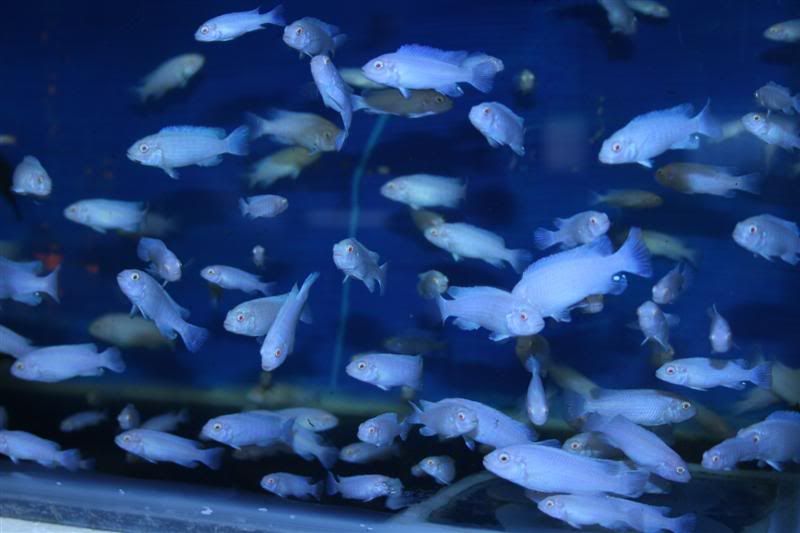
An example of my stocking densities here in my tanks.


So to really get an answer to the question of surface area vs depth of media when it comes to filtration of the water itself it all comes down the the media types used and PH levels but in any type of media used the more the better.You can never have too much but you can certainly not have enough.
At the end of the day if your water has 0 ammonia and nitrites you have enough media no matter how it is being used.
Your next question then becomes,,,do I have enough plants to remove the nitrates to at least a safe level for the fish to happily survive?
If not then weekly water changes come into play.
Here's a scientific example of the benefits of using a porous media (Matrix) compared to a solid media (plastic bio-balls)
Scorio has a very similar surface area for bacteria growth to Matrix.
Matrix™ is a high porosity bio media that provides efficient bio filtration for the removal of nitrogenous waste. Matrix™ is a porous inorganic solid about 10 mm in diameter. Each liter of Matrix™ provides as much surface (>~700 m2) as 170 liters of plastic balls! Plastic bio-materials provide only external surface area, whereas Matrix™ provides both external and internal macro porous surface area. These macro pores are ideally sized for the support of nitrifying and denitrifying bacteria. This allows Matrix™, unlike other forms of bio media, to remove nitrate along with ammonia and nitrite, simultaneously and in the same filter.
Bacteria colonies on the internal and external surface area of Matrix™